Shake Halfway
Why this works
- No flipping. Hot air moves under the basket as well as over it, so a fillet cooks through from both sides. Leaving it alone also keeps it from breaking.
- Garlic goes on at the end. Fresh minced garlic scorches and turns bitter in a 400°F air fryer. Garlic powder in the rub handles the heat. The fresh garlic goes into warm butter for the finish.
- A short, hot cook. 400°F (200°C) colors the surface before the inside overcooks. Lower temperatures take longer and give you paler fish.
Ingredients and swaps
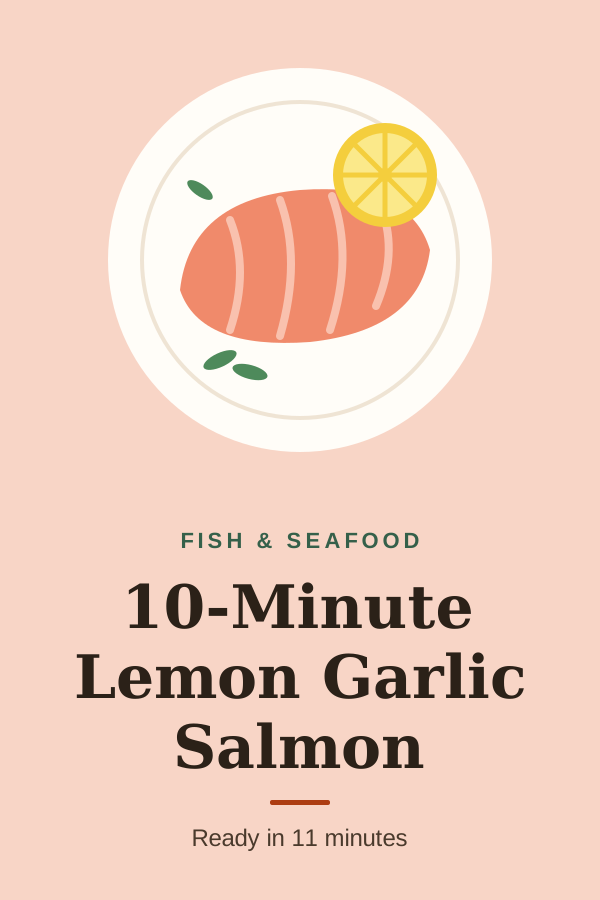
- Salmon. Four fillets of about 6 oz (170 g) each, ideally center-cut and about 1 inch (2.5 cm) thick. Skin-on or skinless both work. Farmed Atlantic salmon is fattier and more forgiving. Wild sockeye and coho are leaner and cook about a minute faster.
- Olive oil. A thin coat stops the surface from drying and helps the spices stick.
- Dry rub. Garlic powder, paprika, salt and pepper. Swap the paprika for lemon pepper or a salt-free seafood blend if you prefer.
- Lemon-garlic butter. One tablespoon of butter, one small garlic clove and a tablespoon of lemon juice. For dairy-free, use olive oil in place of the butter.
Step by step
- Preheat the air fryer to 400°F (200°C) for 3 minutes.
- Dry and season. Pat the fillets dry. Rub the flesh with oil and sprinkle on the garlic powder, paprika, salt and pepper.
- Arrange. Lightly oil the basket. Place the fillets skin-side down, not touching.
- Cook for 7 to 9 minutes for 1-inch fillets. Do not flip.
- Make the butter. While the fish cooks, melt the butter with the grated garlic in the microwave for 20 to 30 seconds. Stir in the lemon juice.
- Check. The salmon is done when it flakes easily with a fork at the thickest point and reads 145°F (63°C). Spoon the butter over and serve with lemon wedges.
Timing by thickness
Thickness matters more than weight. Measure at the thickest point.
| Fillet thickness | Time at 400°F (200°C) |
|---|---|
| 1/2 inch (1.25 cm), tail pieces | 5 to 6 minutes |
| 3/4 inch (2 cm) | 6 to 8 minutes |
| 1 inch (2.5 cm) | 7 to 9 minutes |
| 1 1/4 to 1 1/2 inches (3 to 4 cm) | 10 to 12 minutes |
| Frozen, 1 inch | 12 to 15 minutes (see FAQ) |
Tips
- Start checking early. Salmon goes from just right to dry in about 2 minutes. Open the drawer a minute before the low end of the range the first time you cook it in your machine.
- About doneness. The USDA recommends cooking fish to 145°F (63°C). At that temperature the flesh is opaque and flakes all the way through. Fish keeps cooking for a minute or two after it leaves the basket, so you can take it out a few degrees early and let it rest to reach 145°F.
- The white stuff is harmless. It is albumin, a protein that is pushed out as the fish cooks. You see more of it when salmon cooks hard or long. A lighter cook means less of it.
- Skin sticking? Oil the basket, and slide a thin spatula between the skin and flesh to lift the fillet off if the skin stays behind. Perforated parchment made for air fryers also works. Only put it in with the food on top so it cannot blow into the heating element.
- Cut one big piece into portions. A whole side of salmon cooks unevenly. Portions of the same width finish together.
Storage and reheating
Refrigerate leftover salmon in a sealed container within 2 hours and eat it within 3 days. It is good cold, flaked over a salad or mixed with a little mayonnaise and lemon for a sandwich.
To reheat without drying it out, use a low setting: 300°F (150°C) for 4 to 5 minutes, just until warmed through. Skip the microwave at work if you want to stay on good terms with your coworkers.
What to serve with salmon
- Asparagus or broccoli, cooked in the same basket for 5 to 8 minutes while the salmon rests
- Rice, couscous or small boiled potatoes with the extra lemon butter spooned over
- Garlic Parmesan potato wedges for a fish-and-chips feel
- A cucumber and tomato salad with a splash of vinegar
For more quick seafood, try the 15-minute shrimp tacos. Timings for cod, tilapia and scallops are in the time and temperature chart.